Lean Manufacturing

Engineers and Supervisors: The Lean Partnership That Drives Change

Engineers and Supervisors: The Lean Partnership That Drives Change Introduction: Why Lean Succeeds or Fails at the Engineer–Supervisor Interface In most organisations, engineers and supervisors work closely—but not always effectively. Engineers are often tasked with designing better systems, optimising processes, and solving technical problems. Supervisors are responsible for executing daily operations, managing people, and hitting

Engineers and Supervisors: The Lean Partnership That Drives Change Read More »
The Role of a Team Sponsor: Leadership That Removes Roadblocks

The Role of a Team Sponsor: Leadership That Removes Roadblocks Introduction: Why Most Improvement Teams Stall at Leadership In many organizations, continuous improvement initiatives begin with enthusiasm and momentum—yet slow down once genuine obstacles emerge. Teams identify issues clearly, suggest practical solutions, and even test improvements, but progress halts when decisions, resources, or authority are

The Role of a Team Sponsor: Leadership That Removes Roadblocks Read More »

Building Your PIT Crew: How to Form a Cross-Functional Improvement Team

Building Your PIT Crew: How to Form a Cross-Functional Improvement Team Introduction: Why Improvement Fails Without the Right Team Most continuous improvement efforts do not fail because of poor tools or weak ideas. They fail because the wrong people are involved — or worse, key people are missing entirely. The book emphasizes that improvement isn\’t

Building Your PIT Crew: How to Form a Cross-Functional Improvement Team Read More »

Why Continuous Improvement Fails Without Measurable Goals

Why Continuous Improvement Fails Without Measurable Goals Introduction: When Improvement Effort Doesn’t Lead to Results Many organizations think they are engaging in continuous improvement. Teams participate in workshops, leaders promote ideas, and improvement tasks are listed on schedules and boards. However, over time, enthusiasm diminishes and progress stalls. When leaders ask “Why isn’t this working?”,

Why Continuous Improvement Fails Without Measurable Goals Read More »

Profitability and Productivity: The Two Metrics That Drive Growth

Profitability and Productivity: The Two Metrics That Drive Growth Introduction: Why Growth Is Often Misunderstood Many organizations pursue growth by increasing volume, customers, or complexity before establishing the necessary systems to support it. Revenue rises, but margins decrease. Workloads grow, but results remain stagnant. Teams become busier without improving. Growth, in a Lean sense, isn’t

Profitability and Productivity: The Two Metrics That Drive Growth Read More »

Choosing Your First Process To Improve — Where to Begin

Choosing Your First Process To Improve — Where to Begin Introduction: Why Most Improvement Efforts Start in the Wrong Place When organizations decide to begin a continuous improvement journey, one of the first questions they ask is deceptively simple: Where should we start? Unfortunately, this question is often answered emotionally rather than strategically. Teams often

Choosing Your First Process To Improve — Where to Begin Read More »

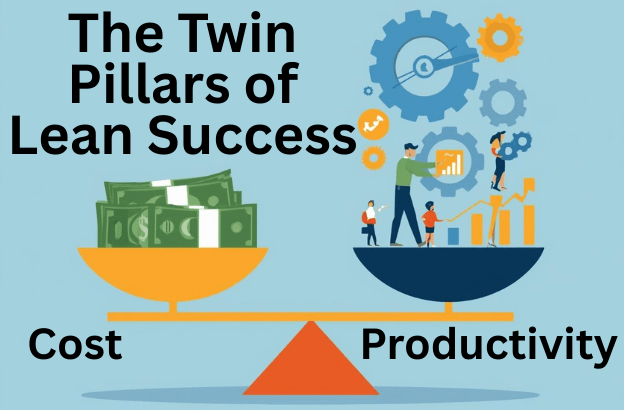
Cost and Productivity: The Twin Pillars of Lean Success

Cost and Productivity: The Twin Pillars of Lean Success Introduction: Why Cost and Productivity Cannot Be Improved Separately Many organizations claim they want lower costs and higher productivity, yet their improvement efforts unintentionally pit the two against each other. Cost reduction initiatives often focus on labour cuts, tighter budgets, or supplier pressure. Productivity initiatives, on

Cost and Productivity: The Twin Pillars of Lean Success Read More »

The Customer’s Clock: Understanding Delivery as a Lean Metric

The Customer’s Clock: Understanding Delivery as a Lean Metric Introduction: Customers Do Not Measure Effort — They Measure Time Most organisations discuss delivery based on planning, scheduling, or logistics performance. Teams focus on labour availability, supplier delays, staffing shortages, and forecast accuracy. However, for customers, the experience is much simpler: Did the product arrive when

The Customer’s Clock: Understanding Delivery as a Lean Metric Read More »

Why Safety Is the Starting Point for Every Continuous Improvement Project

Why Safety Is the Starting Point for Every Continuous Improvement Project Introduction — The Improvement Shortcut That Always Backfires When organizations initiate a continuous improvement effort, the pressure to deliver results is immediate. Leaders feel compelled to enhance efficiency, cut labour costs, and boost output quickly. Safety is often recognized, but rarely regarded as the

Why Safety Is the Starting Point for Every Continuous Improvement Project Read More »

Lean in Numbers: Translating Key Performance Indicators (KPI) Improvements into Cultural Wins

Lean in Numbers: Translating Key Performance Indicators (KPI) Improvements into Cultural Wins Introduction — When the Numbers Change, Something Deeper Is Happening Leaders often speak about culture as if it’s intangible—something you can sense but not quantify. KPIs, however, are regarded as concrete facts: percentages, charts, and calculations that appear in reports and dashboards. Lean

Lean in Numbers: Translating Key Performance Indicators (KPI) Improvements into Cultural Wins Read More »

Process Walk Improvement Ideas

Process Walk Improvement Ideas Introduction — Why Most Improvements Start in the Wrong Place Many improvement efforts begin in a conference room. Teams gather around spreadsheets, reports, and dashboards. They debate numbers, argue about causes, and brainstorm solutions—often without ever seeing the work as it actually happens. While these discussions feel productive, they frequently miss

Process Walk Improvement Ideas Read More »

Building a Lean Case Study: How to Document Success in Your Factory

Building a Lean Case Study: How to Document Success in Your Factory Introduction — Why Most Improvements Are Forgotten Many factories improve. Far fewer factories prove they have improved. Teams reduce lead time, improve flow, eliminate waste, or stabilize quality—but six months later, the gains quietly fade. New leaders arrive. Priorities shift. Tribal knowledge disappears.

Building a Lean Case Study: How to Document Success in Your Factory Read More »

Key Performance Indicators (KPI) Transformation: Tracking What Really Matters

Key Performance Indicator (KPI) Transformation: Tracking What Really Matters Introduction — Why KPIs Often Fail to Improve Performance Most businesses monitor KPIs, but fewer utilise them effectively. Walk into a manufacturing plant or service operation, and you’ll often hear leadership say, “We review our KPIs every week.” Yet the same problems persist: missed deliveries, quality

Key Performance Indicators (KPI) Transformation: Tracking What Really Matters Read More »

Why Implement 5S

Why Implement 5S Introduction In today’s fast-paced, cost-sensitive business climate, efficiency and organization are no longer optional—they\’re crucial. The 5S system—Sort, Set in Order, Shine, Standardize, and Sustain—is a foundational strategy in lean thinking. Implementing 5S offers tangible benefits: an organized workspace, drastic waste reduction, improved process flows, enhanced safety, and cultural transformation toward continuous

Why Implement 5S Read More »

The 5 Lean Principles

The 5 Lean Principles: Building a Culture of Continuous Improvement Discover the five Lean principles that drive lasting efficiency, eliminate waste, and build stronger teams. Learn how managers can apply Lean thinking to create flow, focus on customer value, and foster continuous improvement — without cutting people. Why the 5 Lean Principles Matter Lean isn’t

The 5 Lean Principles Read More »

What Is Lean, Really?

What Is Lean, Really? Most people think Lean is about cutting costs. It’s not. Lean is about maximizing value while minimizing waste. It’s about making work flow smoothly — so people can do their best work without frustration and wasting time. Think of it this way: if a process wastes time, effort, or materials, Lean

What Is Lean, Really? Read More »